Pittsburgh Coexistence
Pittsburgh Coexistence is an artist collective based in Pittsburgh, Pennsylvania, focused on the relationship between local communities and the environment, and the ways that this relationship is complicated by industry and pollution.
To learn more, visit: https://pghcoexist.carrd.co/
DANGER: NO SWIMMING, a collaborative work by Stephanie Taylor and Jessica Keister as a part of Pittsburgh Coexistence.
Silver-based photography is notoriously sensitive to contamination; the purity of photographic gelatin is greater than food-grade gelatin, printing papers must be of the highest quality to form a successful image, and even after developing and fixing, storage and display environments should be as pollution-free as possible.
With this in mind, Jessica Keister and Stephanie Taylor are making salt paper prints, a 19th-century photographic process invented by William Henry Fox Talbot, but substituting contaminated water when the process requires purified water. The polluted water is taken from multiple locations central to the region’s long history of resource extraction and industrial manufacturing. These places and histories also have deep ties to their respective hometowns: steel production (Stephanie) and deep/strip mining (Jessica). The impurities in the water will make the quality and long-term stability of the resulting prints unpredictable, providing yet another tool to illustrate the ongoing and generational impact of Pennsylvania’s environmental contamination.
The work also considers the historical, environmental, and personal impact that these industries have had on their family histories. Inspiration for both digital and hand-drawn negatives includes historic texts and images, contemporary publications, site visits, and on-going conversation and discovery.
To learn more about Jessica Keister and her work, go here.
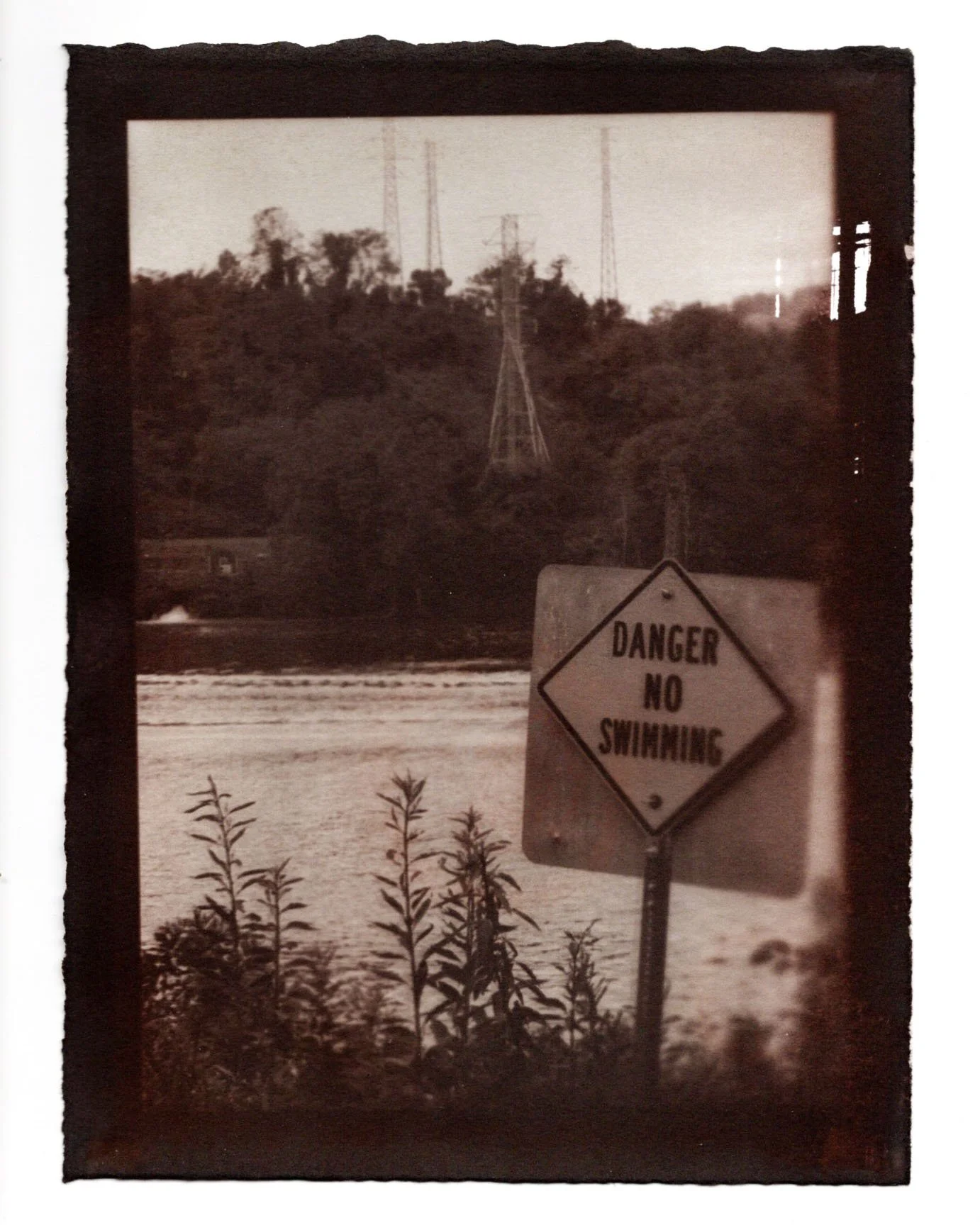
Stephanie Taylor and Jessica Keister, DANGER: NO SWIMMING, 2026, Salt print made with water from the Monongahela River, 6”x8”
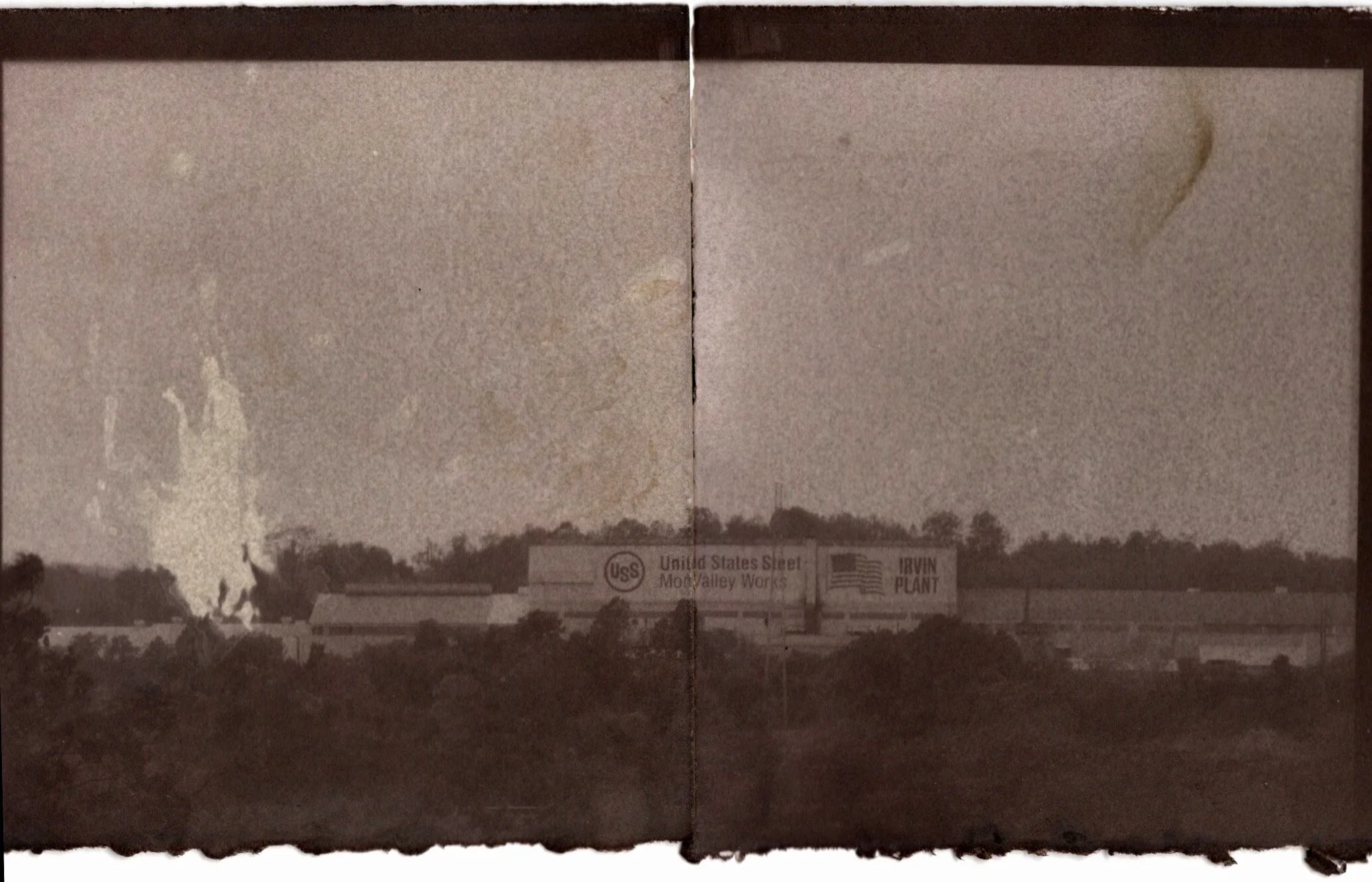
Stephanie Taylor and Jessica Keister, Hell Was a Place, 2026, Salt print made with water from the Monongahela River, 6”x12”
HELL WAS A PLACE
I was told that Hell was a place with constant fires – and I could see such a place on the hillside visible from the backyard of my childhood home. It felt like Hell was never far when I was there.
As an adult, I know this place as the local steel mill – the Irvin Works Plant -- and the fires as the industrial flares that burn off the waste gases produced from the blast furnaces.
The last few times I’ve visited, the flares weren’t visible.
I don’t visit often.
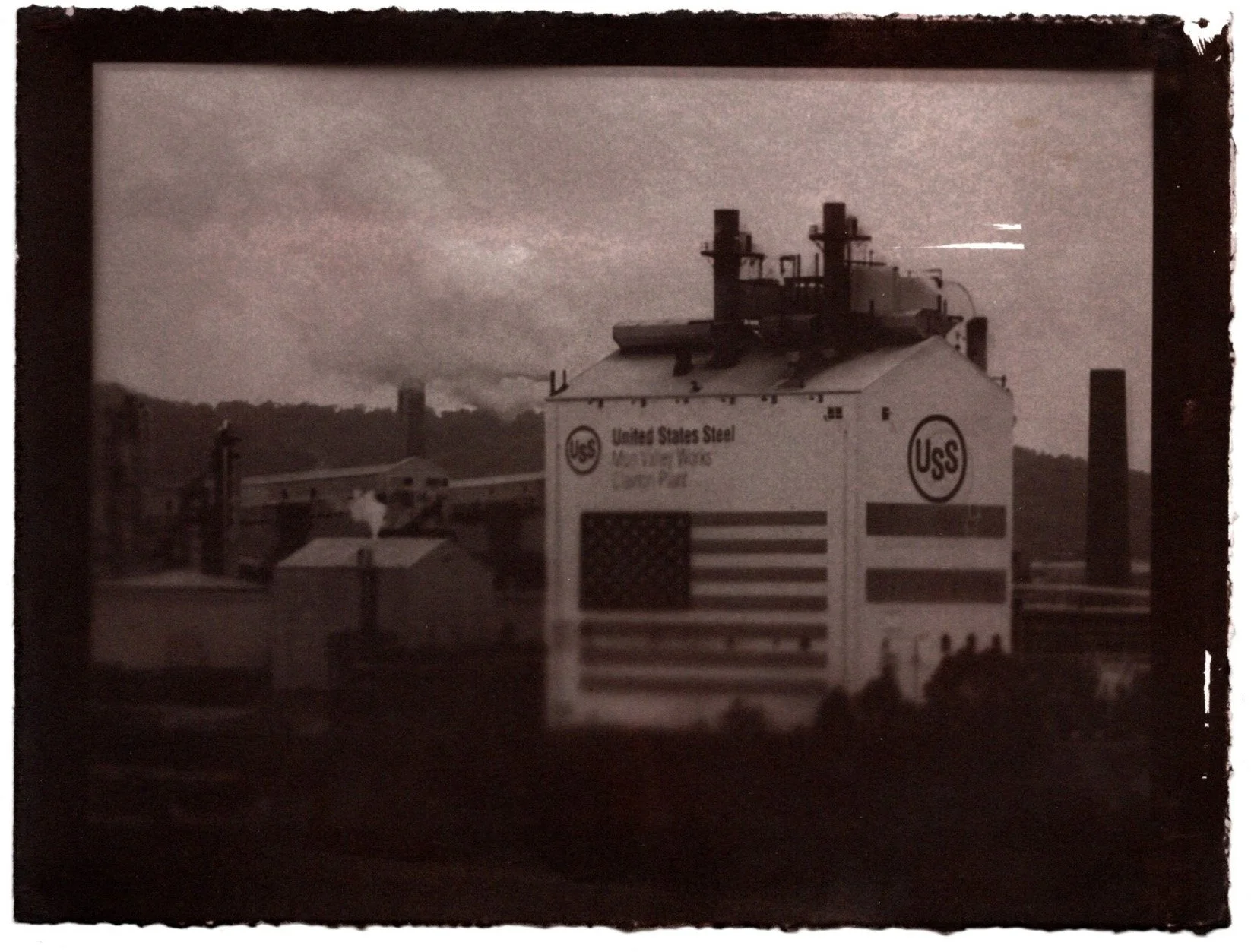
Stephanie Taylor and Jessica Keister, The Way Clouds Smell, 2026, Salt print made with water from the Monongahela River, 6”x12”
THE WAY CLOUDS SMELL
I can vividly remember my dad driving us past the Clairton Mill on the way towards Elizabeth or
Jefferson, which happened often. I would watch the clouds form from the smokestacks.
The smell of rotten eggs, sulfur, would permeate through the car windows.
I swear he’d drive faster to get away from it, but it would linger.
The soot in the air from the Mill would dust the lawn furniture at my friend’s house.
I assume it was also in the air we breathed into our lungs.
In 2025, there was an explosion at the Mill. Two people died and ten were injured.
I’m sure the Mill has had far more casualties than that, though.